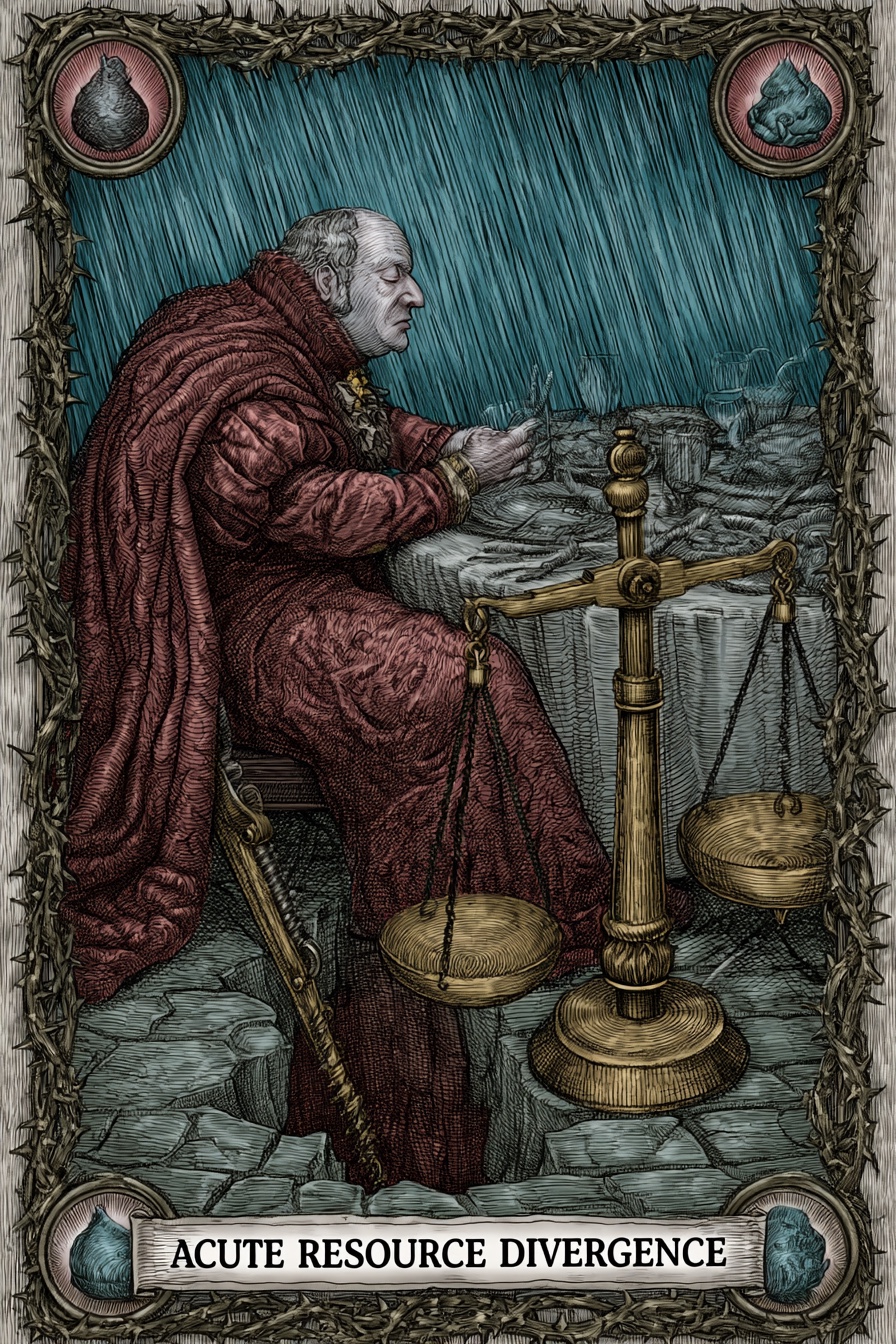
Acute Resource Divergence
What does this mean?
Revenue is contracting significantly, but executive compensation percentage is rising. The organization is refusing to adjust its administrative overhead to match its new economic reality.
The Path Forward
The Realignment
Forces immediate balancing of administrative bloat against actual programmatic output. It demands that every dollar extracted for overhead be justified by community impact.
Title
Representative Institutions
Institutional Epochs
Historical Performance
| Year | Revenue | Top Comp | Comp % Rev | Score | Phase Label | Outlook | Details |
|---|---|---|---|---|---|---|---|
| 2023 | Hidden | Hidden | 33.1% | 29 | Critical Intervention Needed | Gov Risk | |
| 2022 | — | — | 21.3% | 38 | Governance-Stressed | Gov Risk | |
| 2021 | — | — | 21.8% | 40 | Governance-Stressed | Gov Risk | |
| 2020 | — | — | — | 52 | Fragile | Recovery | |
| 2019 | — | — | 18.4% | 40 | Fragile | Decline Risk | |
| 2018 | — | — | — | 49 | Fragile | Stable Watch | |
| 2017 | — | — | — | 49 | Fragile | Recovery | |
| 2016 | — | — | — | 37 | Fragile | Decline Risk | |
| 2015 | — | — | — | 41 | Fragile | Stable Watch | |
| 2014 | — | — | — | 41 | Fragile | Stable Watch |
Officer compensation history
Tax year 2023
| Name | Title | Phone | Compensation | |
|---|---|---|---|---|
| KATHI WALL | Executive Director | 33.1% of Rev | ||
| KEITH LUKE | CITY REP | — | ||
| BOB DUBE | Treasurer | — | ||
| RICHARD PARKHURST | Board President | — | ||
| AMANDA TAYLOR | Board Member | — | ||
| ANDREW SILSBY | Board Member | — | ||
| MICHAEL HALL | Board Member | — | ||
| GARY PEACHEY | Board Member | — | ||
| ALICIA GAUDET | Secretary | — | ||
| CAROLINE SABAN | Board Member | — | ||
| KAREN BOSTON | Board Member | — | ||
| CAROLINE WATTS | Board Member | — | ||
| ANDREW LEBALANC | Board Member | — | ||
| RICK HENNING | Board Member | — |
Tax year 2021
| Name | Title | Phone | Compensation | |
|---|---|---|---|---|
| TOBIAS PARKHURST | Board Member | — | ||
| KEITH LUKE | CITY REP | — | ||
| BOB DUBE | Treasurer | — | ||
| STAN KOSKI | Board Member | — | ||
| RICHARD PARKHURST | Board President | — | ||
| SOO PARKHURST | Secretary | — | ||
| AMANDA TAYLOR | Board Member | — | ||
| PHYLLIS VON HERRLICH | Board Member | — | ||
| ANDREW SILSBY | Board President | — | ||
| CRYSTAL SULLIVAN | Board Member | — | ||
| MICHAEL HALL | Board Member | — | ||
| GARY PEACHEY | Board Member | — | ||
| NICOLE MCSWEENEY | Board Member | — | ||
| ALICIA GAUDET | Board Member | — | ||
| CAROLINE SABAN | Board Member | — | ||
| ELISA ELLIS | Board Member | — | ||
| KATHI WALL | Executive Director | — |
Score breakdown
The three components combine into a single 0–100 score weighted as shown. Full methodology →
Peer comparison
Compared to 45 other orgs in ME with NTEE prefix A8.
Most-divergent component: governance score sits 42 points below the peer median (42 vs. 84).
5-year trend: Acute Resource Divergence
Revenue is contracting significantly, but executive compensation percentage is rising. The organization is refusing to adjust its administrative overhead to match its new economic reality.
Overall score has gone from 40 → 29 over 5 years (declining by 11 points). A multi-year directional move of this magnitude is a signal worth investigating.
What's driving this score
- Comp-to-revenue ratio of 33.1% is above the 90th percentile for orgs of this size (healthy band: 18–22%).
What would change this score
The two changes that would most improve this score:
- Reduce top-officer compensation from 33.1% to under 22% of revenue — would move governance score by ~22 points.
- Separate signing authority from fundraising authority when both are held by one person — removes the concentration penalty (~12 points).
Improving governance is a board decision. These are the levers.